

Winter Wildlife Preppers
To be winter-ready, many wildlife species will forage from dawn to dusk, stockpiling nuts in underground bunkers or small holes throughout their home territory. Eastern chipmunks can stuff as many as 12 acorns into their cheek pockets. At full capacity, these pockets can stretch up to three times the size of their head. Using this built-in grocery bag, a single chipmunk can store up to 165 acorns a day in a burrow system that may reach 10 to 30 feet in length and include multiple cubbies for nesting, food storage and waste disposal.
By winter, a well-stocked food pantry for a chipmunk contains some 5,000 to 6,000 nuts. Tree squirrels shake, sniff and taste acorns during a quick inspection process to determine whether it’s down the hatch now or in the ground for later. By shaking the nut, squirrels can tell if it’s infested with weevils. Infested nuts don’t last long in storage, so it’s cracked open and wolfed down, insect and all.
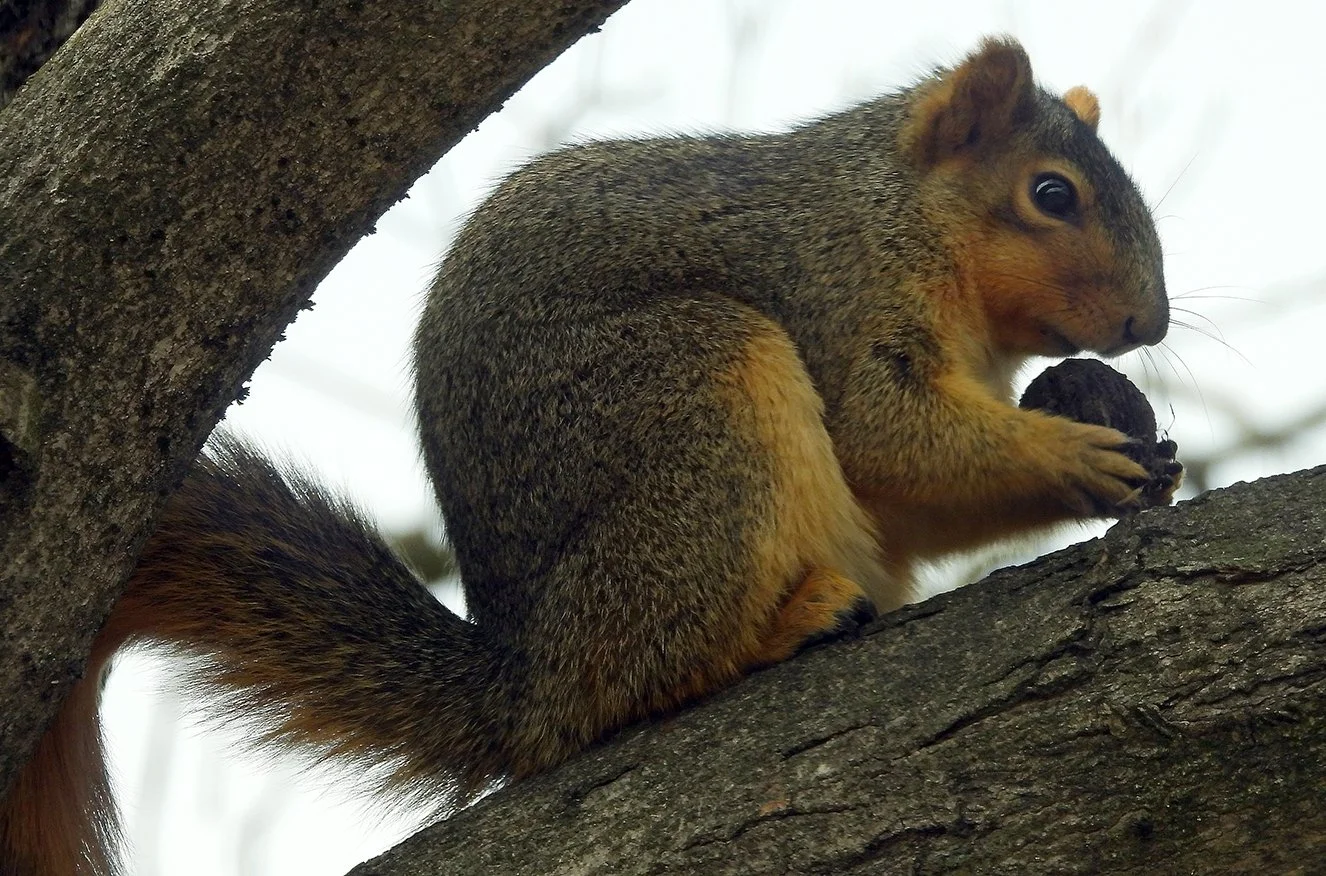
Squirrels have a strong sense of smell and use it to identify whether the acorn came from the white oak or red oak group. Like red wine, acorns from red oaks have higher tannin levels and are more bitter than the nuts produced by their white counterparts.
As a result, squirrels eat about 85% of the white oak acorns gathered given that the nut is sweeter and sprouts quickly. Red oak acorns are perfect for long-term storage because they don’t sprout until the spring. To extend the “fresh by” date of white oak acorns, squirrels chew out the germinating seed before storing it.
Squirrels also perform taste tests by taking a small bite of the nut to assess its quality. Nuts that past inspection without being eaten are frantically hidden in small holes in scattered locations. Eaten nuts are also useful in that they add needed body fat.
Depending on food availability and the squirrel’s behavior and species, it’s not uncommon for a single squirrel to bury hundreds or thousands of nuts in a single season and to bury the same kind of nuts near to each other. This type of wildlife behavior is known as “spatial chunking” and tends to help the animal with memory recall. With their entire winter food supply on the line, squirrels have developed an impressive spatial memory and use visual landmarks, like trees, rocks and bushes, to pinpoint the location of their hidden nuts.
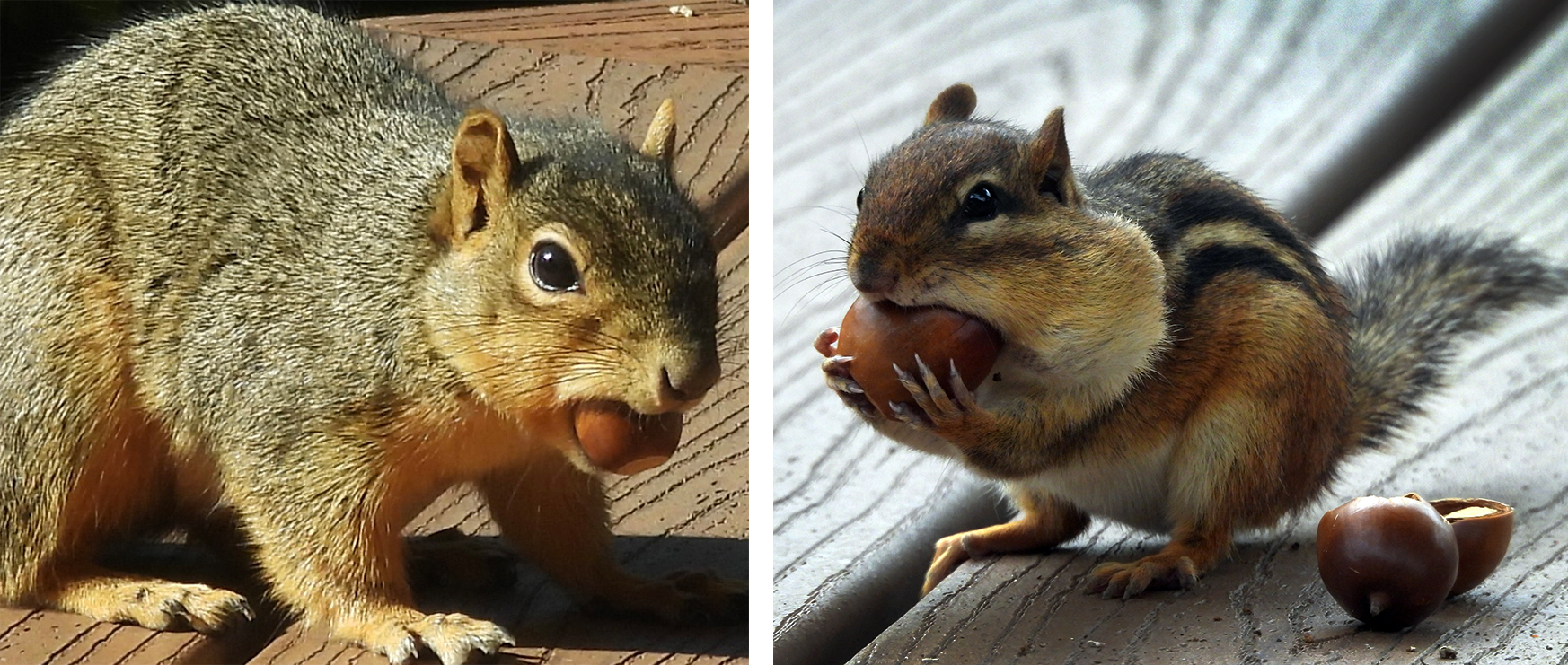
Locating all those nuts is not an easy task, especially when one considers that squirrels also pretend to bury nuts in a shrewd fake out scheme for would-be thieves. They dig a hole and pretend to drop in an acorn and quickly cover it up. Once the ruse is complete, they cleverly scamper off to stash the goods. But the deception doesn’t end there. Because the competition for nuts is fierce and raiders abound, squirrels will dig up and rebury their nuts to protect them from being nicked. All this subterfuge can be confusing even to squirrels, who can forget where their stash is buried and may end up pilfering nuts of other hoarders when attempting to retrieve their own.
Exactly what percentage of buried nuts a squirrel recovers is unclear. Estimates range between 26% and 95% depending on the species and type of nut, with eastern gray squirrels coming out on top. When wildlife fails to retrieve buried acorns, they contribute to the regeneration and spread of oak trees. In fact, the more acorns left unclaimed and the farther away from the parent tree the acorn is planted—the better for the ecosystem. When it comes to planting and moving acorns, the blue jay gets top billing. Jays bury up to 4,500 acorns each fall and can plant them more than a mile from the parent tree. With a recovery rate of one in four, a single jay plants roughly 3,375 trees each year.
In a quest to secure food for their winter survival, countless creatures that depend on acorns become accidental foresters, contributing to the long-term health of their habitat and the diversity of woodland ecosystems.
