

Acorns: Nature’s Super Food
November is crunch time for many species of wildlife, and the hundreds of oak trees growing in Skiles Test Nature Park are ready with a big assist. Whether the goal is to fatten up, store up or both, these trees are a crucial part of the game plan for winter wildlife preppers.
Right before the long season of scarcity, oak trees in the park produce a bounty of one of nature’s very best foods for wildlife—the acorn. Acorns are essential nuggets of energy, jam-packed with carbohydrates and fats along with protein and minerals. And if that’s not enough, this highly nutritious grub is also easy to find and comes in a perfectly designed, portable container.
Birds, rodents and larger mammals depend on acorns to survive the winter. Whitetail deer are among the top consumers of nuts, with acorns making up to 75% of a deer’s late fall and early winter diet. The nuts are a dietary staple of squirrels, chipmunks, rabbits, opossums, raccoons and mice. Woodpeckers, blue jays, crows, wild turkeys and many species of ducks also consume acorns.
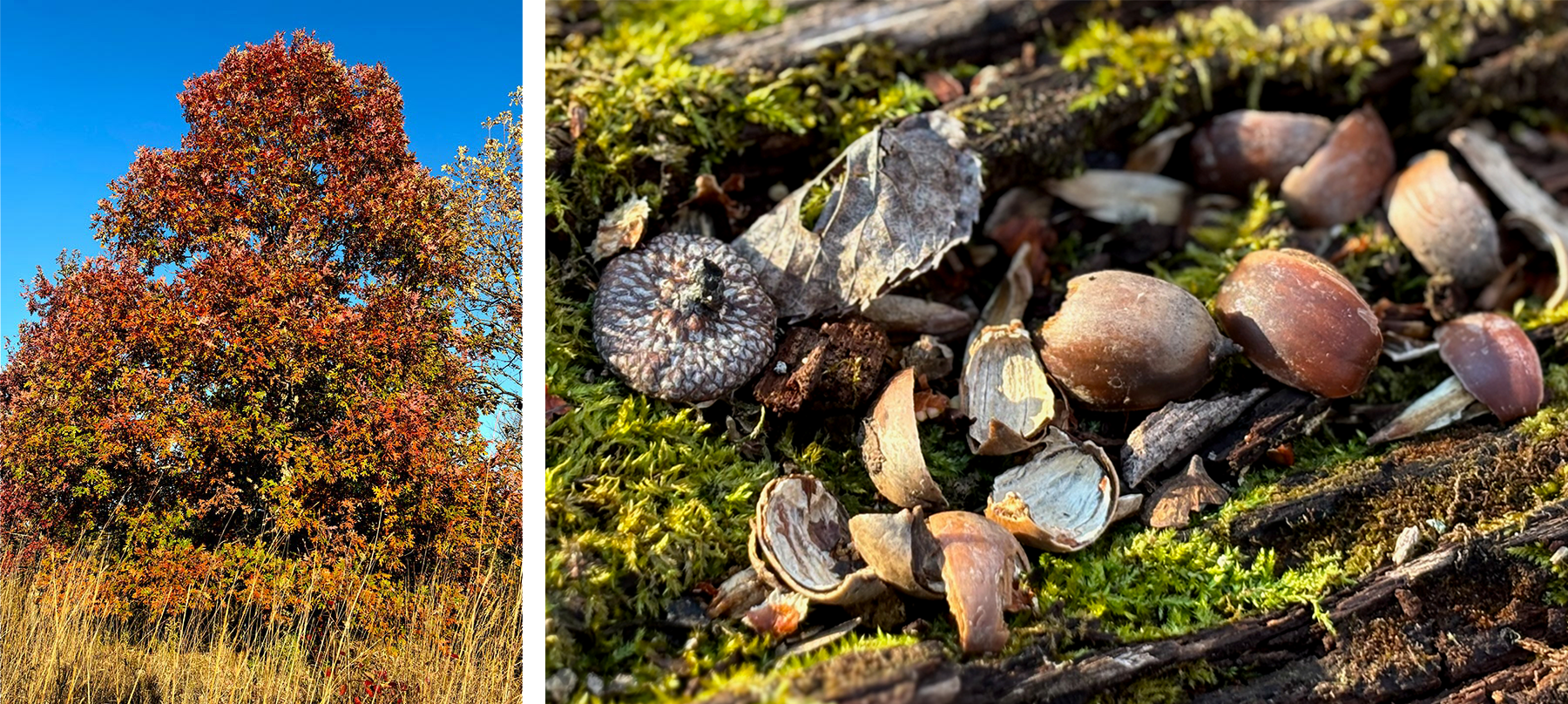
To meet nature’s demand, oaks need to produce lots of acorns, and some trees are more than up for the task. In terms of production, certain trees become big-box suppliers of the stuff while other oaks contribute little to the wildlife food market. The inventory of acorns also fluctuates depending on weather conditions, tree species and location.
In some years, overall nut production takes a nosedive while other years a bumper crop or “mast” floods the market, far exceeding what wildlife can consume and hoard.
During the mast years, a mature oak tree can produce up to 10,000 acorns. Producing all this food zaps the tree of energy, diminishing its crop the following year. At the same time, all those acorns end up producing lots of baby squirrels, chipmunks, deer and the like with plenty left over to generate a nice crop of oak seedlings.
