

Fall Colors: The Big Reveal Ahead
Fall is the most visually striking time of year in Skiles Test Nature Park. During the month of October, the park’s 80 acres of broadleaf trees show off a variety of stunning leaf colors in their dramatic retreat into a winter hiatus.
The trees prepare for their big reveal as fall approaches. Shorter days and relatively cooler temperatures alert deciduous trees that it’s time to divert water and energy from their leaves to other vital parts of the tree in preparation for the cold months ahead. By pulling back nutrients, the tree stops making chlorophyll, the pigment responsible for producing the vibrant green color of leaves. As the chlorophyll is gradually reduced, the green color of leaves begins to fade and yellow, orange and red pigments hidden in the leaves get the spotlight. The result is a dazzling display of autumn color.
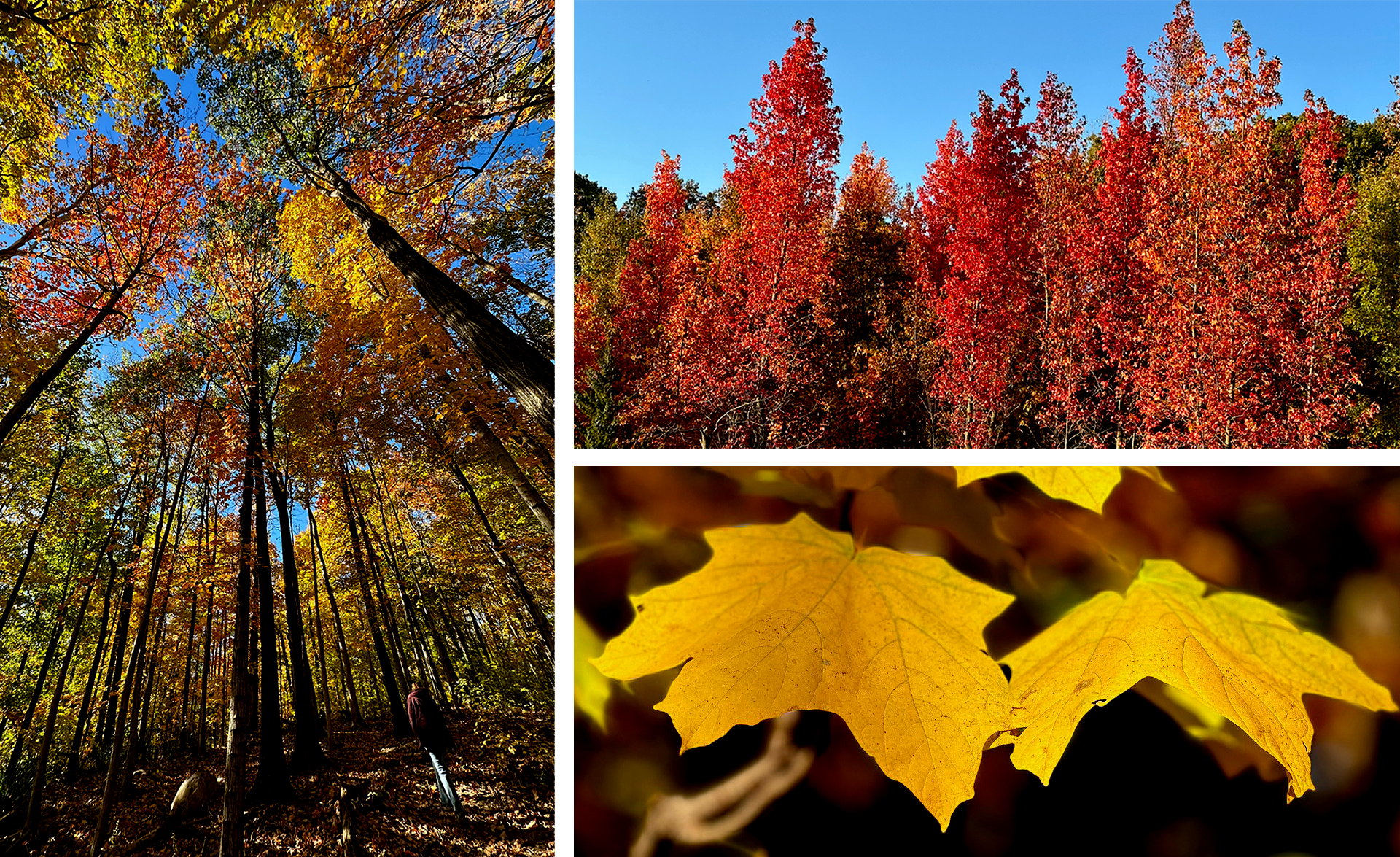
The mix of broadleaf tree species in the nature park make the transformation even more vibrant and breathtaking. Sugar maple, sweet gum, beech, tulip polar, bitternut and shagbark hickory, and a variety of oak species, including northern red oak, Shumard oak and Chinquapin oak dominate the park’s landscape. The result is a palette of colors characteristic with each tree species.
Anyone with a sugar maple or sweet gum in their yard can attest that these tree species generate an exceptionally vibrant mix of colors from bright yellow to deep orange and red, with some sweet gum leaves presenting purple hues. Beech, tulip polar and hickory add rich yellows and golden bronze to forest. The park’s oaks can display a range of shades from yellow and rich bronze to bright red-orange and russet red.
In addition to tree species, the range and intensity of leaf color is influenced by temperature and the amount of moisture in the soil. When it comes to color, a succession of warm, sunny days and cool, crisp but not freezing nights tends to encourage the production of red, purple and crimson pigment. Yellow, gold and orange pigments are always present in leaves and don’t vary much with temperature. As for moisture, seasonal droughts or heavy rainfall can reduce the concentration of the colors produced. Ideally, a warm wet spring and a summer that is not too hot or dry coupled with warm sunny fall days with cool nights is the perfect recipe for brilliant fall colors.
In central Indiana, the fall colors are expected to peak in mid to late October. But don’t wait until peak season, part of the splendor is watching the park’s trees slowly transition. You can track the seasonal change in foliage colors in Indiana and throughout the U.S. at the link below.
