

Park Improvements: 2022 - Present
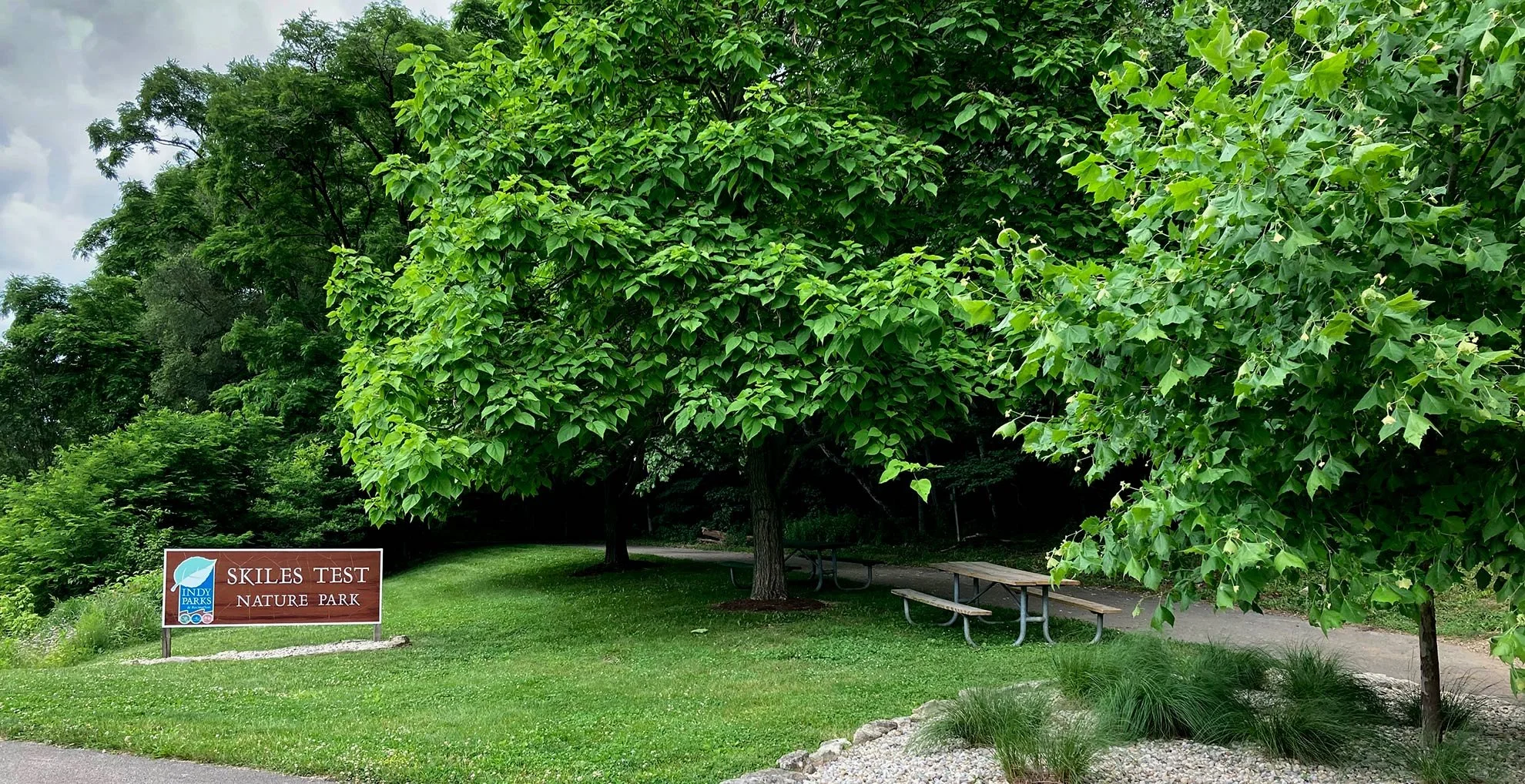
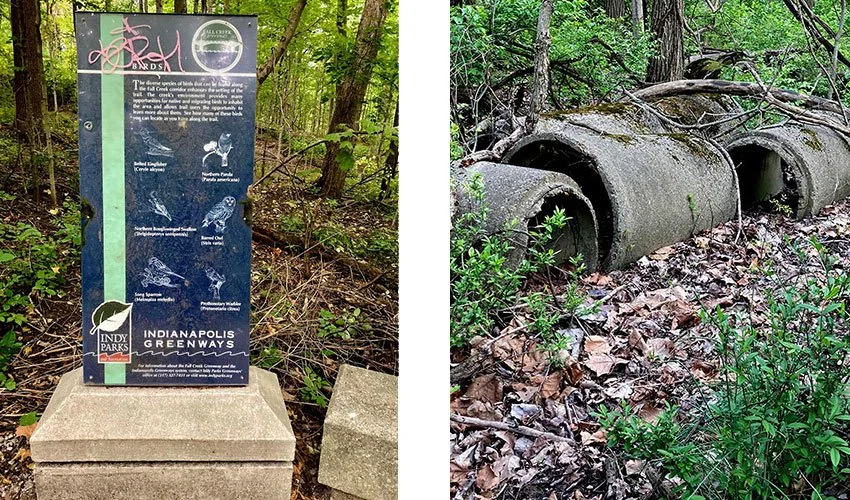
When we began our work in 2022, park visitors were greeted by defaced signage and rundown amenities; forest floors covered in bush honeysuckle; a neglected, overgrown park entrance; sections of sewer pipe and other concrete debris; rusting remnants of an industrial past; and more than 1,000 feet of fencing scattered throughout the landscape.
Since then, we have been on a mission to turn Skiles Test Nature Park into a high-quality nature park known for its diverse natural habitat, well-maintained physical appearance and welcoming, safe environment. In pursuit of this aim, we have adopted an approach focused on community stewardship, advocacy and enhanced funding opportunities. When compared to the condition of the park in 2022, much progress has been made, but there’s more to do.
Park Enhancements
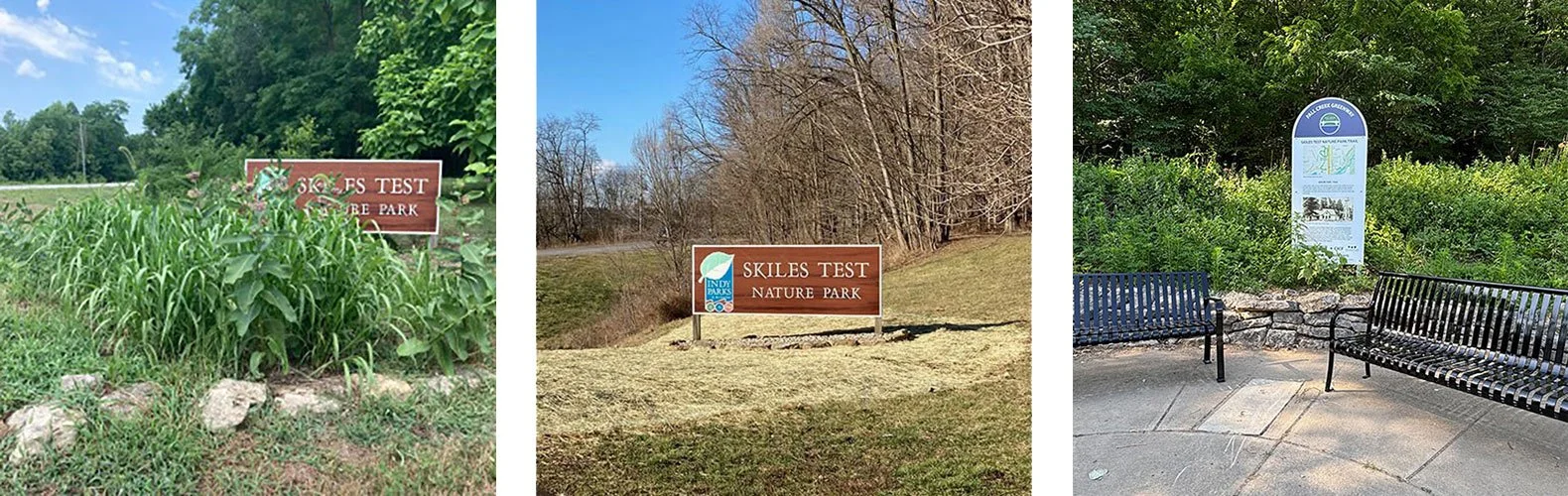
The first area we tackled in 2022 was the Fall Creek entrance to the park. By June 2022, the flower beds that had been weeded and maintained a month prior were once again overgrown. It was clear that this area needed a more maintainable landscape. Over the summer, we developed a plan that called for converting three beds to grass. The fourth bed would be cleared, planted with ornamental grasses and covered in a layer of river rock. Landscaping fabric would be installed underneath the rock to control growth. The BRAG Board agreed to fund the project, which was completed in December 2022.
In December 2023, BRAG was awarded $1,300 from Reconnecting Our Waterways (ROW) for a large, one-sided interpretive sign. ROW secured funding from the Herbert Simon Family Foundation to create new signage along the city’s six waterways and greenways. The sign, which was installed in 2024, highlights the historical legacy of Skiles Edward Test and provides park users with a site map.
In 2022, the city replaced a broken black bench with a primed bench – which left one bench gray and the other black. During the spring 2023 cleanup, both benches got a fresh coat of shiny black paint thanks to Maaco Collison Repair and Auto Painting, and rotten wood on the picnic table was replaced with treated lumber donated by Emergent Construction.
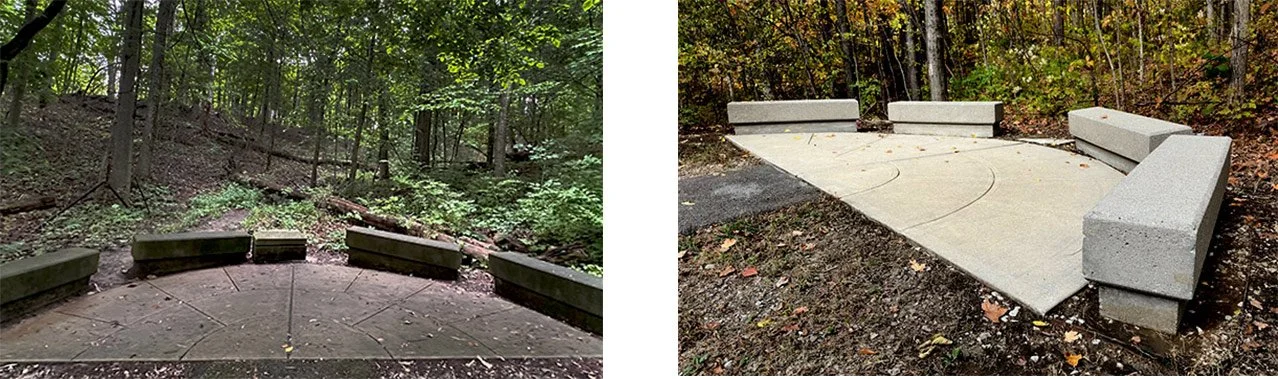
The concrete pads and benches in the five alcoves along the Skiles Test Trail were power washed in November 2025, removing nearly two decades of dirt, grime and organic matter. The washing cleaned and brightened these rest areas, enhancing the appeal and beauty of the park.
Removing Eyesores
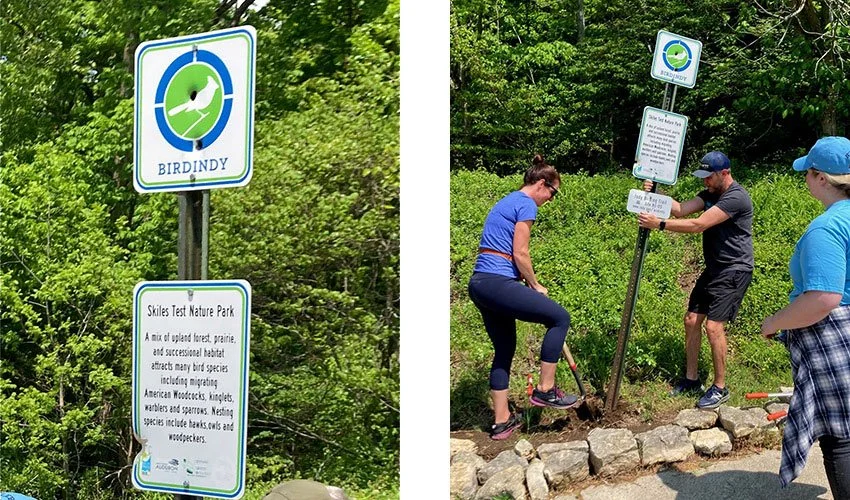
An Indy Bird sign, which was riddled with bullet holes, and the two graffiti-laden Greenway signs were removed and discarded during the 2023 spring cleanup.
In November 2024, an Indianapolis DPW crew removed 12 sections of sewer pipe situated at the park’s north entrance. According to park neighbors, the pipe had been a fixture in the park for more than 50 years. We began advocating for its removal in the summer of 2022. With an estimated weight of more than a ton a section, heavy equipment was used to dislodge the pipe from its woodland surroundings.
Two months later, an Indianapolis DPW crew took out six concrete bases in the park’s seating areas. These bases once held interpretive signs but became an eyesore along the Skiles Test and Fall Creek trails when Indy Parks adopted new signage standards. In December, we joined the Millersville at Fall Creek Valley group in advocating for their removal. The project was completed by the end of January 2025.
Major Upgrade
In the fall of 2022, we met with Phyllis Boyd, director of Indianapolis Parks and Recreation Department and presented a case for park improvements. Specifically, we focused on three main issues: vegetation management, unauthorized trails and vast amounts of fencing and other industrial debris blighting the park’s landscape. In the fall of 2024, Director Boyd assigned a team of AmeriCorps land stewards to the park to address these issues.
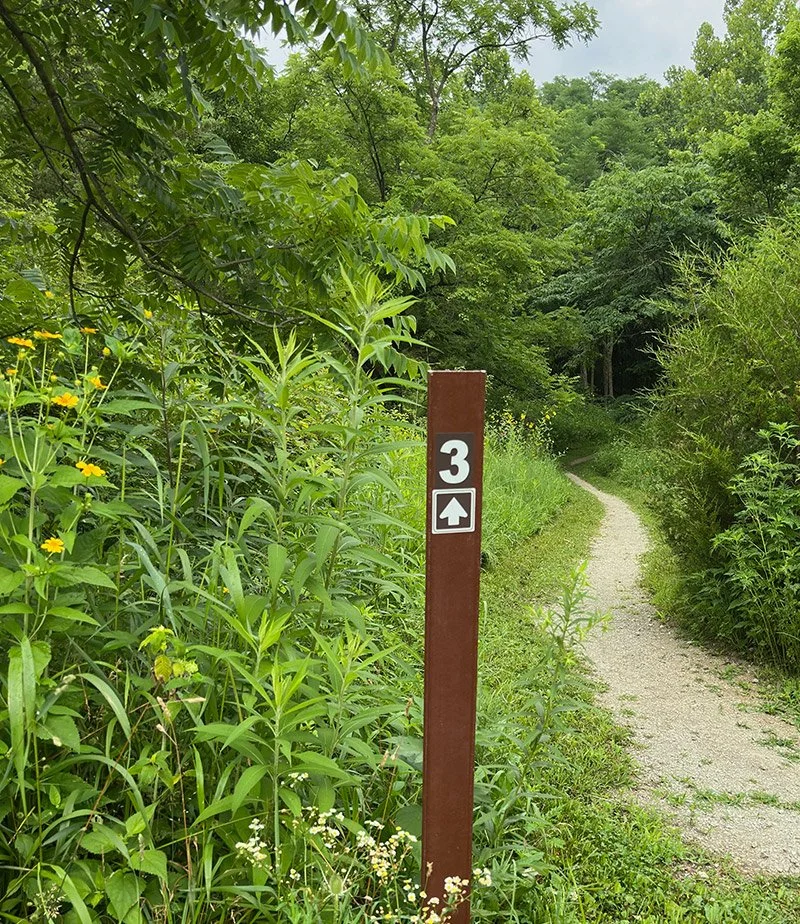
The team removed Asian bush honeysuckle from the eastern ridge of the park and hundreds of feet of farm fencing throughout the park. They also transformed a series of random foot paths into a unified trail system by constructing new trails that pulled it all together. Through their efforts, the park’s trail system more than tripled in distance, growing from approximately 1.5 miles to nearly 5 miles of trails.
The AmeriCorps team also collected geospatial data and were prepared to use the data to create a digital map of the new trail system. That piece of the project was upended in early May 2025 after the federal government cut funding for AmeriCorps. In total, their work constitutes a major upgrade to the park and its trail system.
Community volunteers play a crucial role in improving the aesthetic and environmental quality of Skiles Test Nature Park. Each year, the Friends group and a host of volunteers and supporters come together at the annual spring cleanup to tackle the park’s ongoing maintenance needs. The work continues on a smaller scale throughout the year and in 2026 included a volunteer day with a group of employees from First Merchants Bank. Together, volunteers have made the park a more vibrant place for the community to connect, recreate and explore nature.
Hands-On Volunteer Work
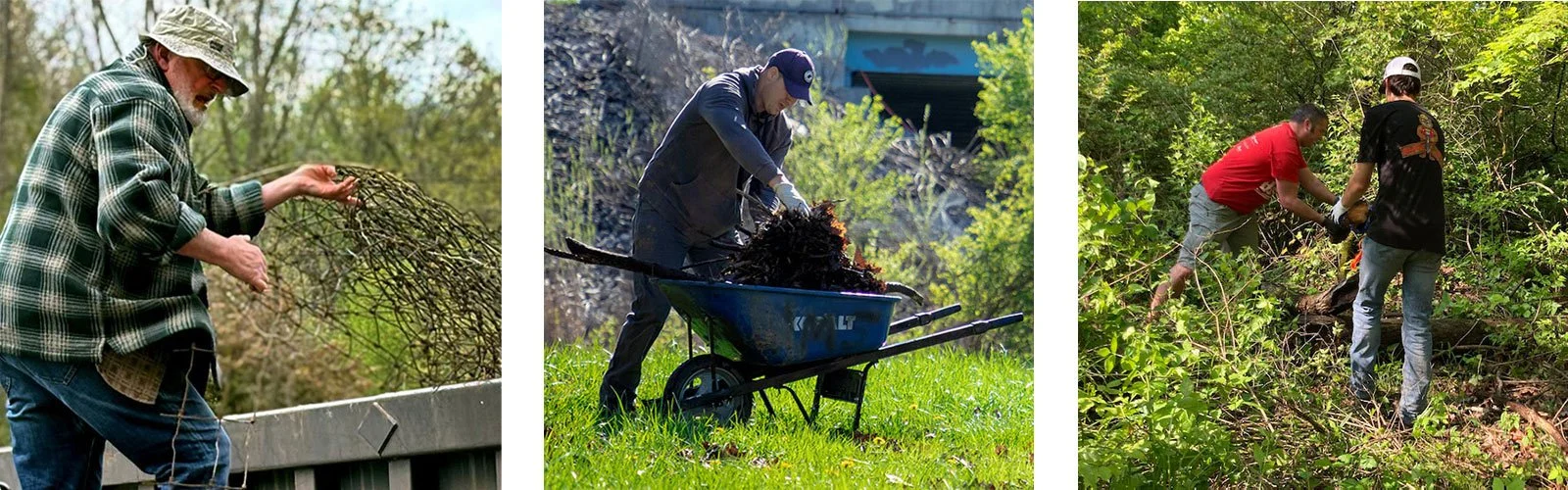
Since 2023, park volunteers have:
Removed hundreds of feet of fencing, scores of fence posts, a large gate and other decaying fragments from the Test era.
Removed degraded signage and replaced rotted wood on the picnic table.
Worked with an area business to have the benches at the entrance repainted.
Restored the park’s drainage culverts.
Pulled loads of invasive garlic mustard and cut back the growth of other invasives.
Built a dozen habitat piles to benefit wildlife and keep the understory open.
Mowed, trimmed overgrown trails to keep them usable.
Controlled the overgrowth along the sides of trails and around the alcoves.
Widened trails by removing sediment.
Repaired the park’s wooden fence.
Restriped the parking lot.
Picked up litter.
Performed general upkeep activities in the park’s north and south entrances.
Removed leaves from the paved trail and culvert.
Removed snow from the paved trail.