Making It Through Winter
For whitetail deer, the most critical month of winter is March. By then, their fat stores are limited and forage is running thin. With little left in the tank, a long cold March can heavily tax a deer’s survival instinct.
A whitetail’s ability to endure harsh conditions depends largely on its physical condition and fat stores heading into winter. Fat provides an important source of energy that deer can draw on in periods of winter stress. When it comes to putting on extra layers of fat, a fall diet rich in acorns and other tree nuts found in forested areas along the Fall Creek corridor provides an important nutritional boost for deer heading into winter’s challenging conditions.
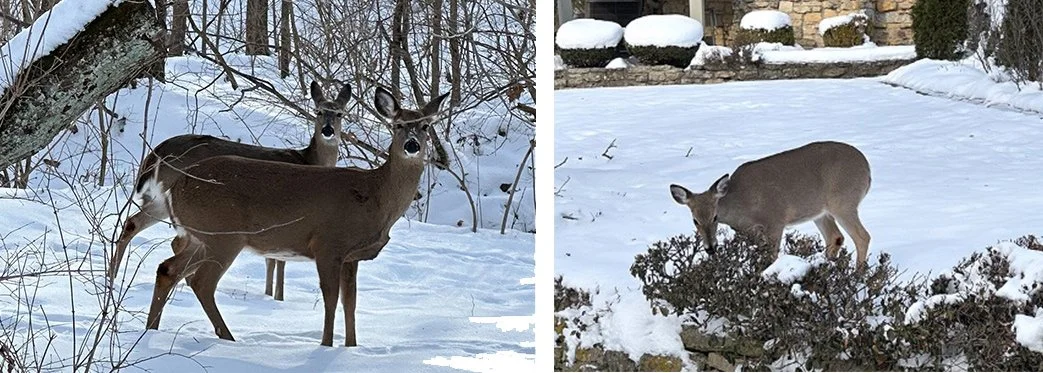
As temperatures bottom out and food becomes scarce, the forest menu changes to available twig tips and buds. While Skiles Test Nature Park provides acres of this stuff, deer prefer certain varieties of woody browse to others. And since deer aren’t confined to the park, the expensive, ornamental shrub next to your front door may become the daily special.
On the bright side, twig tips are a lifesaver to whitetails given the nutrients that are concentrated there and the deer’s ability to digest them. The same cannot be said about corn, pellets and other foods we may want to put out for deer. According to the Indiana Department of Natural Resources, feeding deer can disrupt their natural biology and cause more harm than good to the health of the animal.
Another way deer overcome the slim pickings and bitter weather is to simply hunker down and not move for days to conserve energy. To keep warm, deer rely on a specially designed two-layered winter coat that consists of a short, dense wooly underfur that insulates the animal’s body and long, hollow outer hairs that trap body heat, absorb warm sunlight, and repel water to keep the undercoat dry. Given their ability to survive and even thrive in winter climates, whitetail deer are truly astounding animals.