

Tons of ‘Junk,’ Fine Furnishings
The first major cleanup of the property that is now Skiles Test Nature Park was a three-day affair that attracted some 50,000 spectators and required a skilled auctioneer and the backing of more than a dozen security officers, several concessionaires, a volunteer fire department, and a 20-acre meadow that was converted into a parking lot. Bidding began on May 21, 1964, at 10:30 a.m., but by 6 a.m. that day, 100 cars were lined up waiting for the 65th Street gate to open. By 11 a.m., the field was filled with cars. They came by the thousands on day one and the two days that followed. One Sherriff’s deputy compared the frenzy to race day in Speedway.
Some 90% of attendees were sightseers. The other 10% came to find a bargain amid the personal belongings of the late Skiles E. Test, who died on March 18, 1964. In news reports at that time, Test was described as a “man who loved animals, lived well and bought in quantity.” From 150 kegs of unused nails to 800 pairs of men’s shoes size 8C, Test’s penchant for buying in bulk was on full display throughout the three-day event.
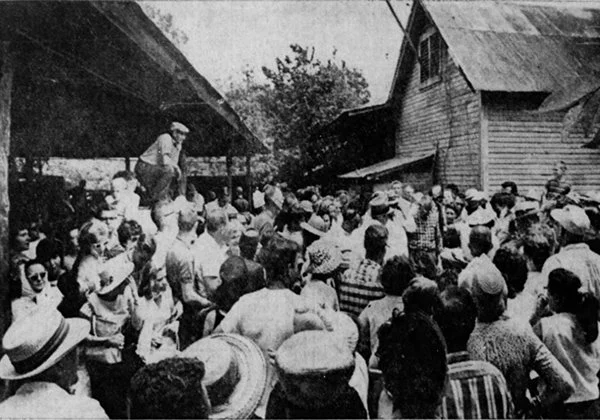
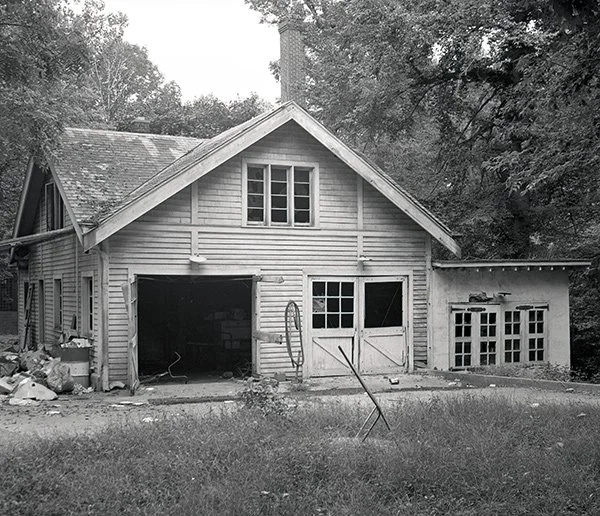
The first items to go were two dilapidated cars and a truck that went for $125. A complete sawmill with track and blades sold for $250. In all, “several hundred tons of junk” were snapped up almost as fast as the auctioneers could move from one heap to the next. During the first two days, rolls of industrial cord, sheets of siding, hand tools, hoops of rusty wire, thousands of spare plumbing and electrical parts, huge bales of twine, carloads of sawhorses, and “more than $75,000 worth of new hardware items and power tools” hit the auction block. According to one spectator, Test had more hardware than most hardware stores.
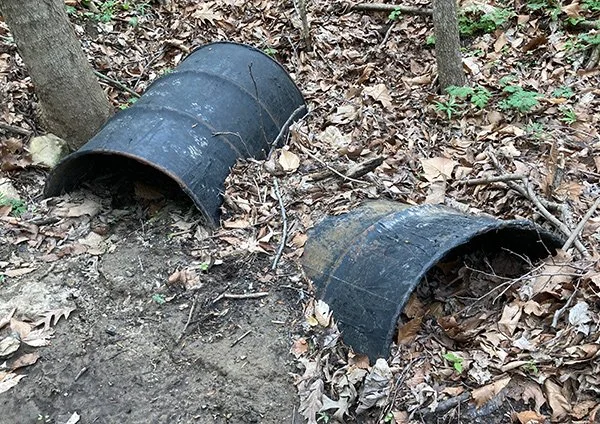
Day two saw the sale of the huge motors and generators used to light the estate along with eight 12,000-gallon oil drums that were half buried in a ravine near the power plant. The drums were part of a storage system that once included 28 tanks. A standby generating system also sold. Test, who was president of a company that ran several one-stop auto service, repair and parking garages, operated “a largely home-made” high-voltage generating plant on his estate. To safeguard attendees, the Castleton Volunteer Fire Department provided fire protection and first aid.
An estimated 30,000 browsers along with several professional buyers and antique dealers picked their way through thousands of household furnishings and personal effects on the last day of the auction. Items for sale included 20 Oriental rugs, more than 15,000 records, dozens of miniature cat caskets, 300 bottles of aspirin, diamond rings, antique furniture, fine China, crystal, artwork and a baby grand player piano with 150 rolls of music. By 3 p.m., more than two-thirds of the household stockpile that had taken eight days to collect and organize had been carted away.
From the number of people who attended to the sheer volume, weight and variety of items sold, the three-day event was hailed at the time as the largest auction in the city’s history. It was estimated that hundreds of tons of everything from industrial machinery to fine furnishings left the grounds of what would one day become a nature park. Yet while impressive, the initial cleanup would pale in comparison to the removal work that awaited the Indianapolis Parks and Recreation Department once they took possession of the land a decade later.
