

Returning to a Forest
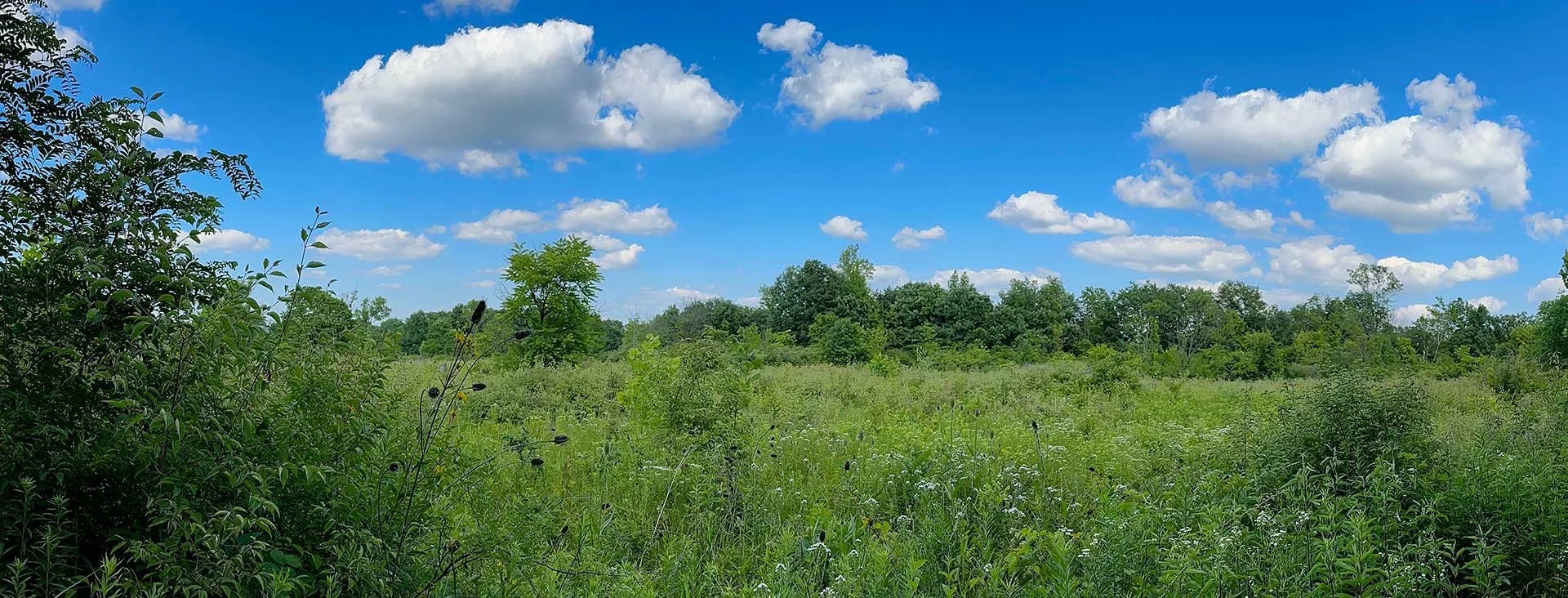
In 1988, the City’s Metropolitan Development Commission and the Board of Parks and Recreation adopted a Master Plan for Skiles Test Nature Park. At the time, approximately 20 acres of parkland was cultivated fields, and the central section, where the farmhouse, garage and various buildings once stood, was overgrown with weeds and grasses. The plan would dramatically transform these areas by locating a nature center on the central section and converting the fields into a variety of distinct natural areas, such as a backyard wildlife garden, a wildflower meadow, and an early successional woodland. Together the center and the natural areas would provide an indoor/outdoor educational facility for children and community groups on a programmed basis.
While the plan never fully materialized, one new habitat area did. In the mid-1990s, the Indianapolis Office of Land Stewardship seeded 16 acres of formerly cultivated farmland with a mix of native grasses and wildflowers. The field conversion was made possible through a cost-share program from the U.S. Fish and Wildlife Service called Partners for Wildlife, which helped pay for the initial seed.
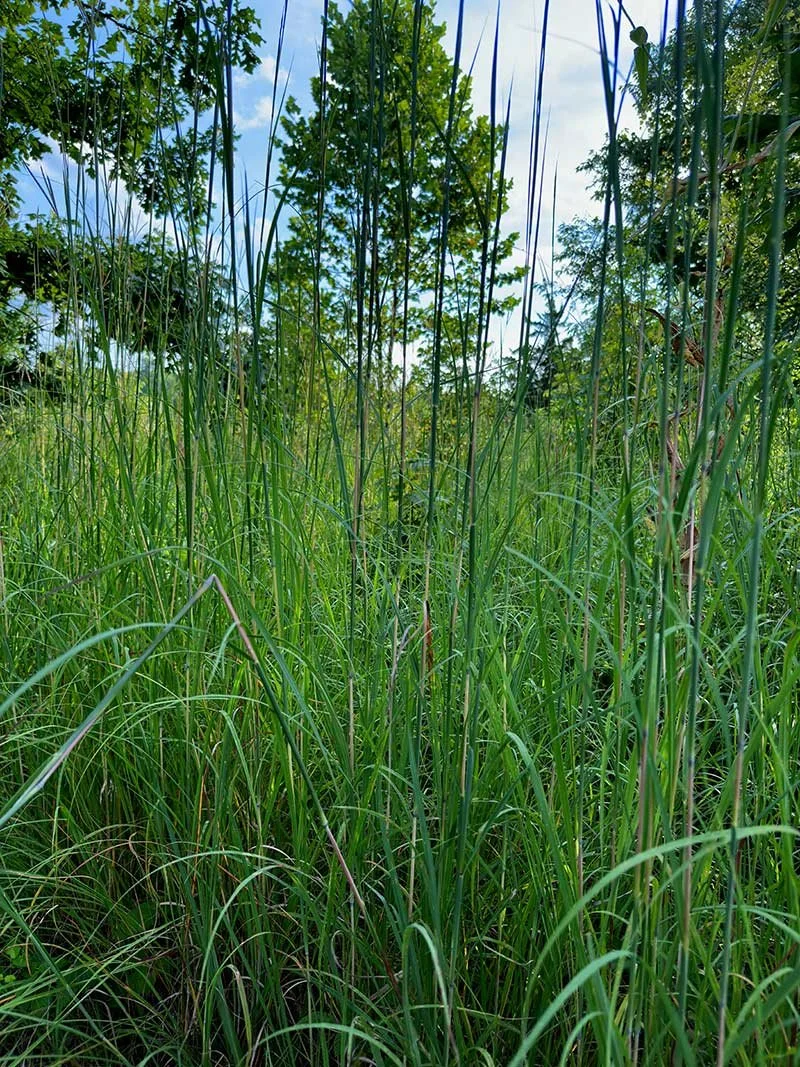
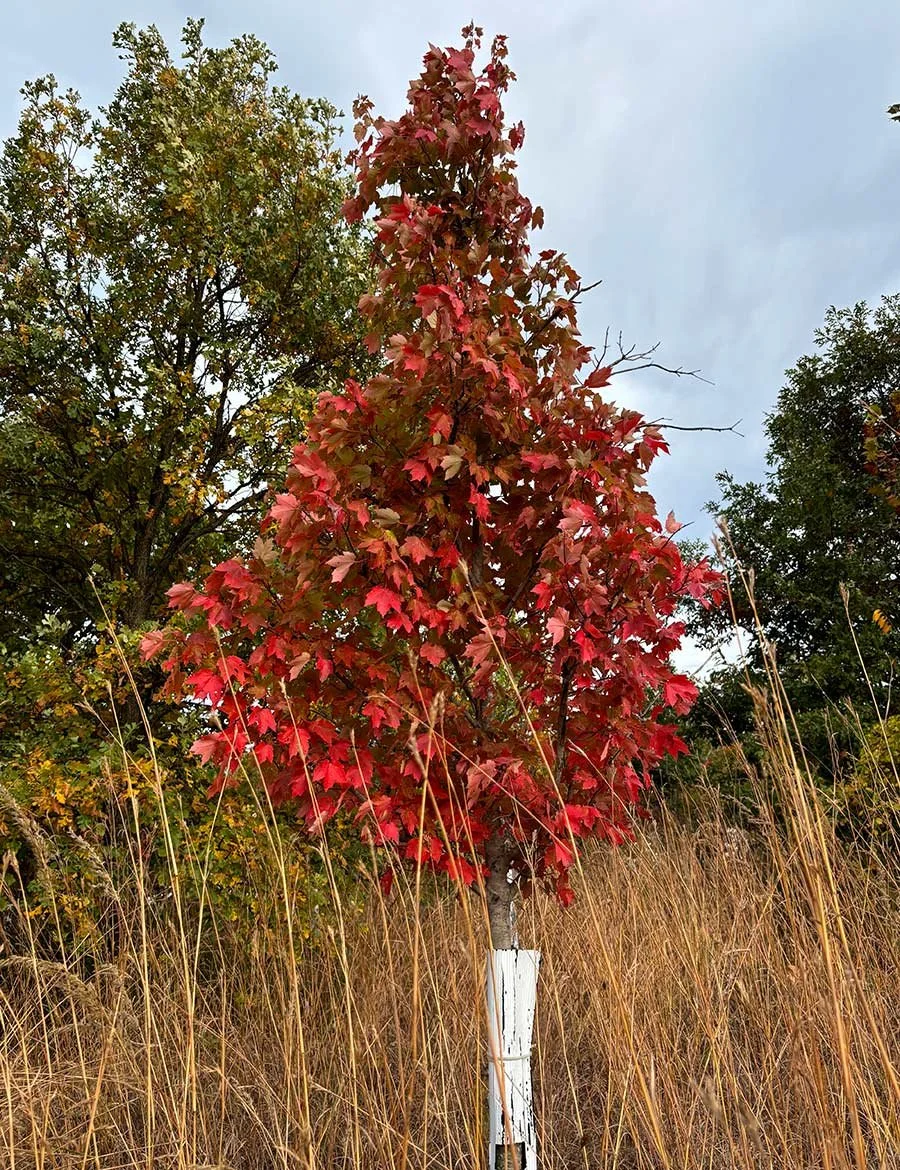
Converting farm fields into a habitat-rich prairie takes time—approximately three years. Once established, a prairie lasts about eight to 12 years in a previously forested area before the plant mix begins to change. Ecologists refer to this process as forest succession. The appearance of shrubs and tree seedlings throughout the Nature Park’s prairie are visible signs that this slow, orderly process is occurring. The Office of Land Stewardship, which manages the Park’s natural areas, is not only letting the prairie naturally transition, but has aided its progression by planting native hardwoods on the eastern edge of the grassland. More trees will be planted in the area as funds become available. Even with this intervention, it will take decades for deciduous trees to grow into a young forest.
Enabling the prairie to become a woodland again helps protect and expand the remnant forests that are a part of the landscape in northeast Indianapolis. These fragmented forests have long endured punishing disturbances from urban development and human activity. While they have survived against extreme odds, their small size and isolated proximity to urban landscapes confine wildlife movement and accelerate biodiversity loss. Connecting forest fragments, parks and other natural areas into a larger intact habitat works to reverse this trend and creates a refuge for biodiversity.
