

Harsh Land Use
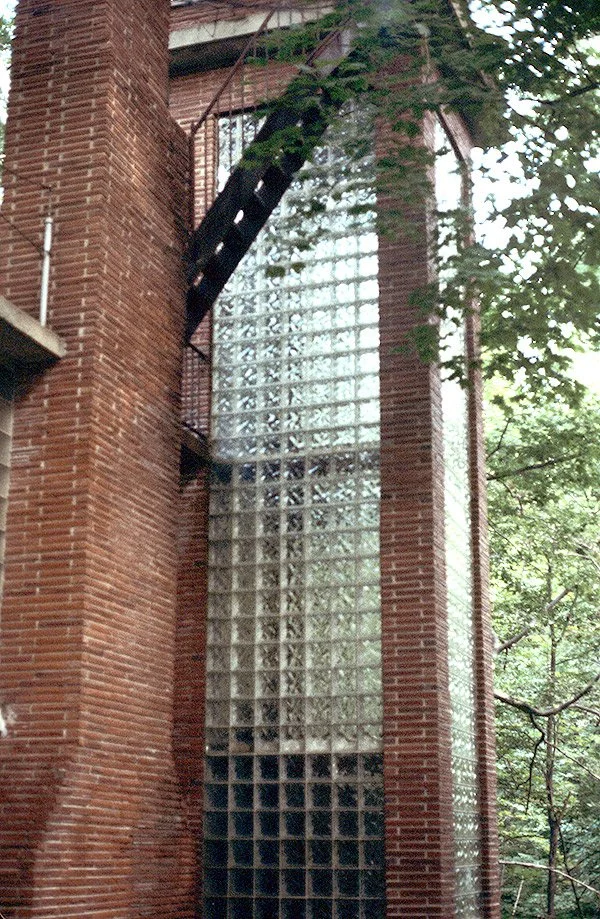
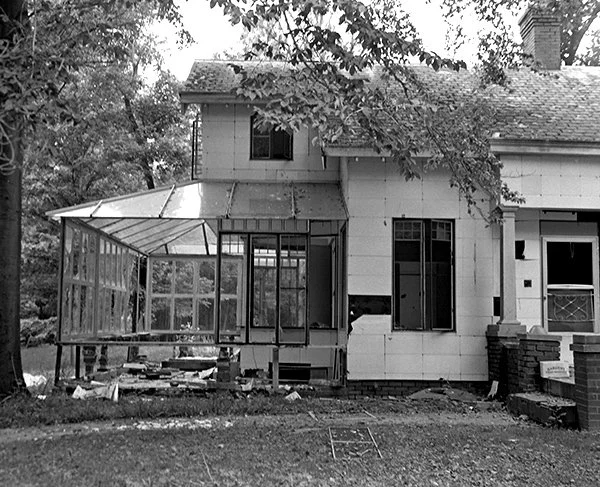
From 1913 to 1964, the park’s property served as the hub of a large estate owned by Skiles Edward Test, a prominent businessman and unconventional innovator. During this time, Test lived on the property, and the land became dotted with an assortment of barns, garages, workshops, a DC electric generating plant and one-of-kind structures—the most famous of which was an elaborate three-story brick, glass and marble bathhouse.
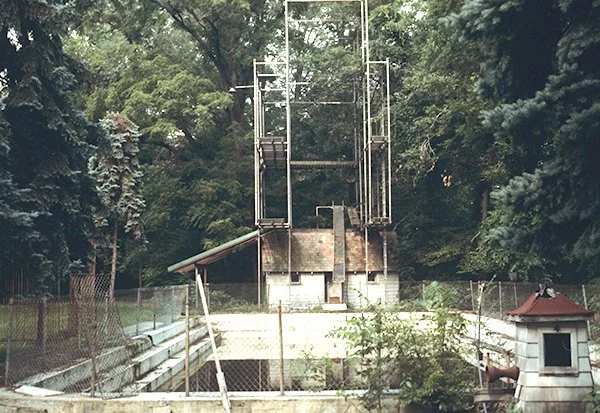
The bathhouse was equipped with an elevator that took guests from the basement to a rooftop sundeck that overlooked a 40-by-80-foot swimming pool. Considered an engineering marvel, the pool reportedly held 100,000 gallons of water initially supplied by an underground stream. Later, the water was pumped from Fall Creek and heated by sunlight through more than 60 10-foot pipes. A metal tower standing some three stories high held four diving boards and a 20-foot slide. A motorized surfboard ran from one end of the pool to the other.
The estate was largely self-sustaining, with its own water tower and working water system, an underground electric power plant, sawmill, machine shop, dairy, four gasoline pumps with two 500-gallon gas tanks, and a small rail system that circled the property. As a working farm, the land contained dairy cattle and pigs in addition to several Saint Bernards and scores of stray cats kept in a one-acre, fenced-in “cat park,” with special feeding devices and small pens heated by lightbulbs in the winter.
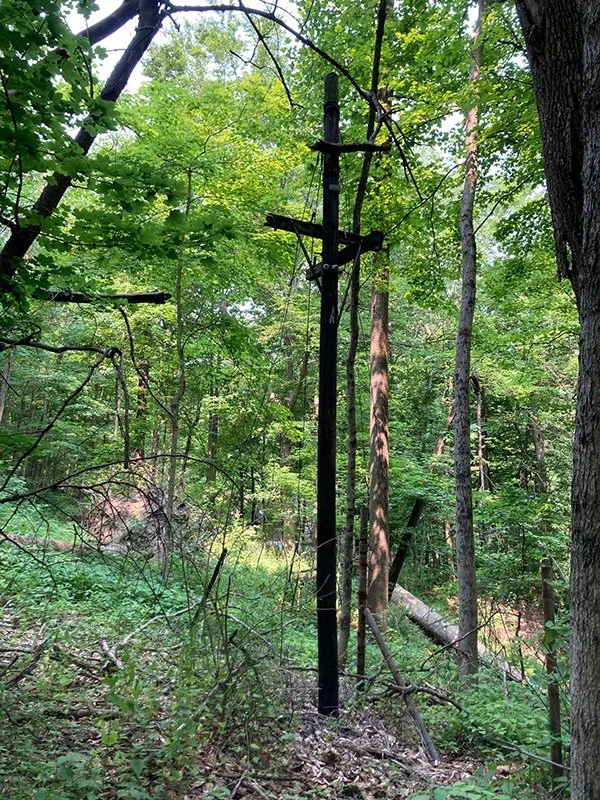
A portion of the property was also set aside for deceased pets that upon their death were buried in carpet-lined caskets beneath small headstones with brass nameplates. Test had built a ski lift structure that would transport him from the house to a bluff (now taken by Interstate 465) where his beloved cats were buried. At the time of Test’s death in 1964, an estimated 100 to 150 of his stray cats needed new homes.
Sometime before WWII, the property gained notoriety as the site of an urban legend known as the “House of Blue Lights.” The folklore likely stemmed from the blue lights that Test strung around his property and his extensive use of mirrors, glass and glass block as decorative and structural elements throughout the interior and exterior of the house, bathhouse and pool area. In combination, the reflection of the light against the glass features gave the property an eerie look, which likely advanced a widespread rumor that his wife had died and was interred in a glass-encased, blue-lit casket inside the family’s farmhouse.
The myth drew trespassers and prompted Test to fence off the property to keep curiosity seekers and vandals at bay. After his death, a 15-foot chain link fence was erected around the pool and the house as preparation began for the first major cleanup and the estimated 50,000 people it would attract.
