

Banner Year for Upgrades
What a difference a year makes! Beginning in late fall 2024 through fall 2025, city crews, land stewards, restoration professionals, community volunteers, and city and elected officials engaged in an all-hands-on deck effort to improve the aesthetic and environmental quality of Skiles Test Nature Park.
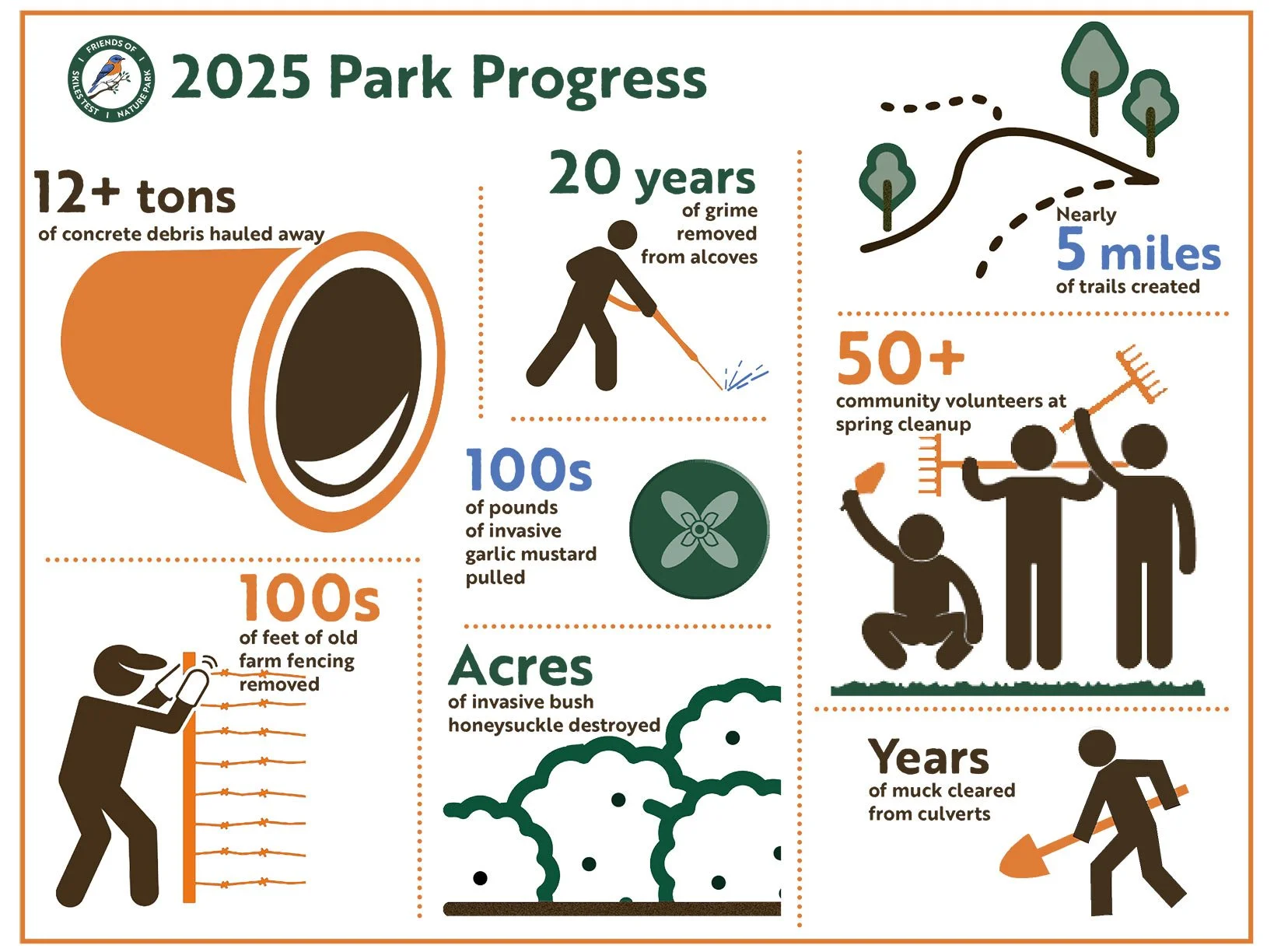
Overall, tons of concrete debris was removed; acres of Asian bush honeysuckle was ground up and effectively destroyed; nearly 1,000 feet of fencing and hundreds of pounds of invasive garlic mustard were sent to the dumpster; years of muck was cleared from the culverts; the trail system was expanded; and nearly two decades of grime was removed from the alcoves.
Herculean Efforts
The banner year for park improvements kicked off with the removal of 12 sections of sewer pipe situated at the park’s north entrance. According to park neighbors, the pipe had been a fixture in the park for more than 50 years. We began advocating for its removal in the summer of 2022. In late November 2024, an experienced crew from the Department of Public Works arrived. With an estimated weight of more than a ton per section, heavy equipment was used to dislodge the pipe from its woodland surroundings.
Two months later, DPW returned to take out six useless concrete bases in the park’s seating areas. These bases once held interpretive signs but became an eyesore along the Skiles Test and Fall Creek trails when Indy Parks adopted new signage standards. In December, we joined the Millersville at Fall Creek Valley group in reaching out to Indy Trails and Greenways and advocating for their removal. The project was completed by the end of January 2025.
A Major Upgrade
Years of deferred maintenance requests and restoration projects were addressed when Phyllis Boyd, director of Indianapolis Parks and Recreation Department, assigned a team of AmeriCorps land stewards to the park in fall 2024. Two years earlier, we met with Director Boyd and presented a case for park improvements focused on vegetation management, unauthorized trails and the vast amounts of fencing and other industrial debris blighting the park’s landscape. All three areas were addressed by the AmeriCorps team.
When the AmeriCorps crew arrived, they began taking out the invasive bush honeysuckle on the eastern ridge of the park. Their work opened the forest floor, fostering the regeneration of young trees and native plants.
The crew returned in April 2025 and removed hundreds of feet of farm fencing throughout the park and transformed a series of random foot paths into a unified trail system, expanding the park’s trail system from approximately 1.5 miles to nearly 5 miles of trails. The team also collected geospatial data and were prepared to use the data to create a digital and printable map of the trail system. That piece of the project was upended in early May after the federal government cut funding for AmeriCorps. In total, their work constitutes a major upgrade to the park and its trail system.
Spring Cleanup
More than 50 volunteers turned out at the spring cleanup and completed a variety of maintenance and environmental projects. The hard-working crew cleared areas of invasive garlic mustard; removed multiple sections of fencing, scores of fence posts, a large gate and other decaying fragments from the past; cut back overgrowth along the trails and widened sections of the footpath; unclogged the culverts along the asphalt trail, picked up litter; and trimmed, weeded and spruced up the entrance and the alcoves along the paved trail.
Restoring the North Woods
In May, the Office of Land Stewardship sent a team of restoration professionals to clear several acres of bush honeysuckle growing in the northwest section of the park. The infestation of honeysuckle was so large and dense in this area that a tractor with a forest mulcher was used to grind it into small pieces. But even with these measures, resprouting can occur so the crew returned later in the year and applied an herbicide to new growth. Eradicating this invasive plant exposes the forest floor to increased light and rain and creates a stronger more resilient woodland.
Like New Again
Lastly, the five alcoves along the Skiles Test Trail got a good scrubbing in late October to erase nearly two decades of dirt, grime and organic matter. Before the cleaning, the concrete pads and benches were dark and discolored, and a thick stand of vegetation encircled the area. The vegetation was cutback by a volunteer, and a hired contractor removed the grime, exposing bright, clean concrete that enhances the appeal and beauty of the park.
All along, our primary goal has been to transform Skiles Test Nature Park into a high-quality natural area that supports diverse plant and animal life native to Indiana landscapes. The significant improvements and attention the park received over the past year represents a significant step forward toward attaining this goal. We are grateful for the restoration work the park received last year and so very thankful for everyone who helped make this progress possible.
