

The Mysterious, Magical Monarch Butterfly
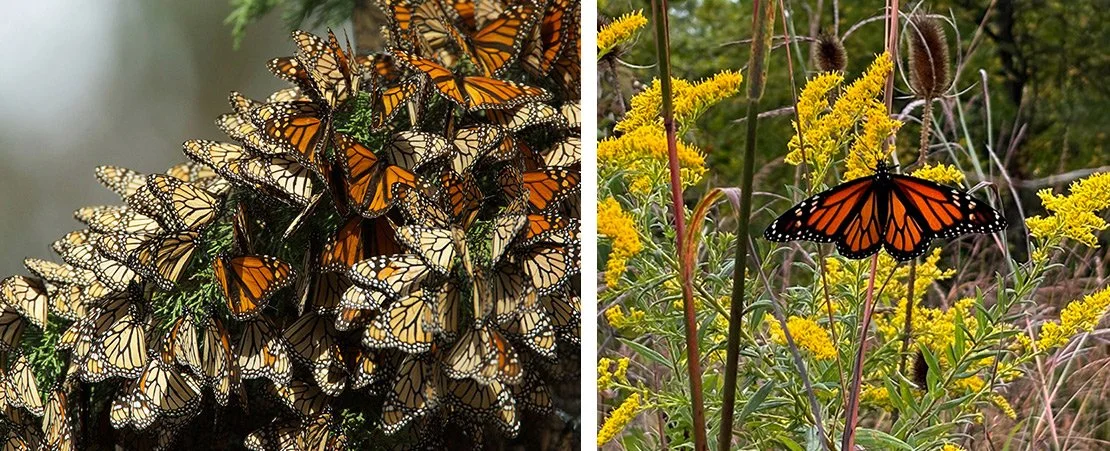
Monarchs blanketing trees in the mountains of Mexico (left) and a monarch at Skiles Test Nature Park. Photo credit (at left): U.S. Fish and Wildlife Service.
Late summer is peak butterfly season at Skiles Test Nature Park. Throughout August and September, you can watch these fascinating insects as they feed on the park’s abundant source of nectar-rich wildflowers. Look for butterflies on brightly colored flowers that grow in clusters. Flower clusters provide a convenient landing platform from which butterflies can access multiple blooms and rest while feeding.
About 150 different species of butterflies call Indiana home. While most of these enchanting insects live only a few weeks as winged adults, late-season monarchs are a different story. These monarchs are not like their short-lived parents, grandparents and even great grandparents that slowly migrated north over the summer, producing offspring and completing their life cycle within a few weeks. The monarchs we see at this time of year are preparing to undertake one of nature’s most impressive migrations and live up to eight months to accomplish it.
Known as the monarch “super generation,” these butterflies are truly special. With a wingspan of 3 to 4 inches, they fly up to 3,000 miles from the northern U.S. and Canada to a forest where their great-great grandparents once spent the winter. Having never made the trip before, this generation of monarchs finds its way to a patch of fir trees in the mountains of central Mexico some 10,000 feet above hillside farms. Having crossed half a continent, tens of millions of monarchs huddle together in the cool, moist air, blanketing the trees so thickly that branches bend under their weight.
How they know exactly where to go remains a mystery. They seem to have been born with the instinct and genetics to make a great migration. This generation of monarchs is bigger and can fly farther than other monarchs. They also possess an internal solar compass that directs them southward. But how they pinpoint the fir forests of central Mexico and what makes them stop there is still unclear.
Migrating monarchs travel between 50 to 100 miles each day and take up to two months to reach their destination. Exactly how these delicate creatures that weigh less than a paperclip can travel so far is another unanswered question. Abundant sources of nectar along the way are certainly part of answer. During the day, monarchs must visit hundreds of flowers to get enough fuel for the trip. With a high concentration of sugar in addition to water and other nutrients, nectar builds up fat reserves that power these tiny insects through the journey and sustains them throughout the winter when they become inactive.
After about four months in Mexico, the super generation will mate and migrate north to Texas to lay their eggs, producing the year’s first new generation. As their life comes to an end, subsequent generations will continue northward producing offspring until a super generation is produced and migration begins again. According to Monarch Watch, the period of peak monarch migration in Indianapolis is Sept. 14-26.
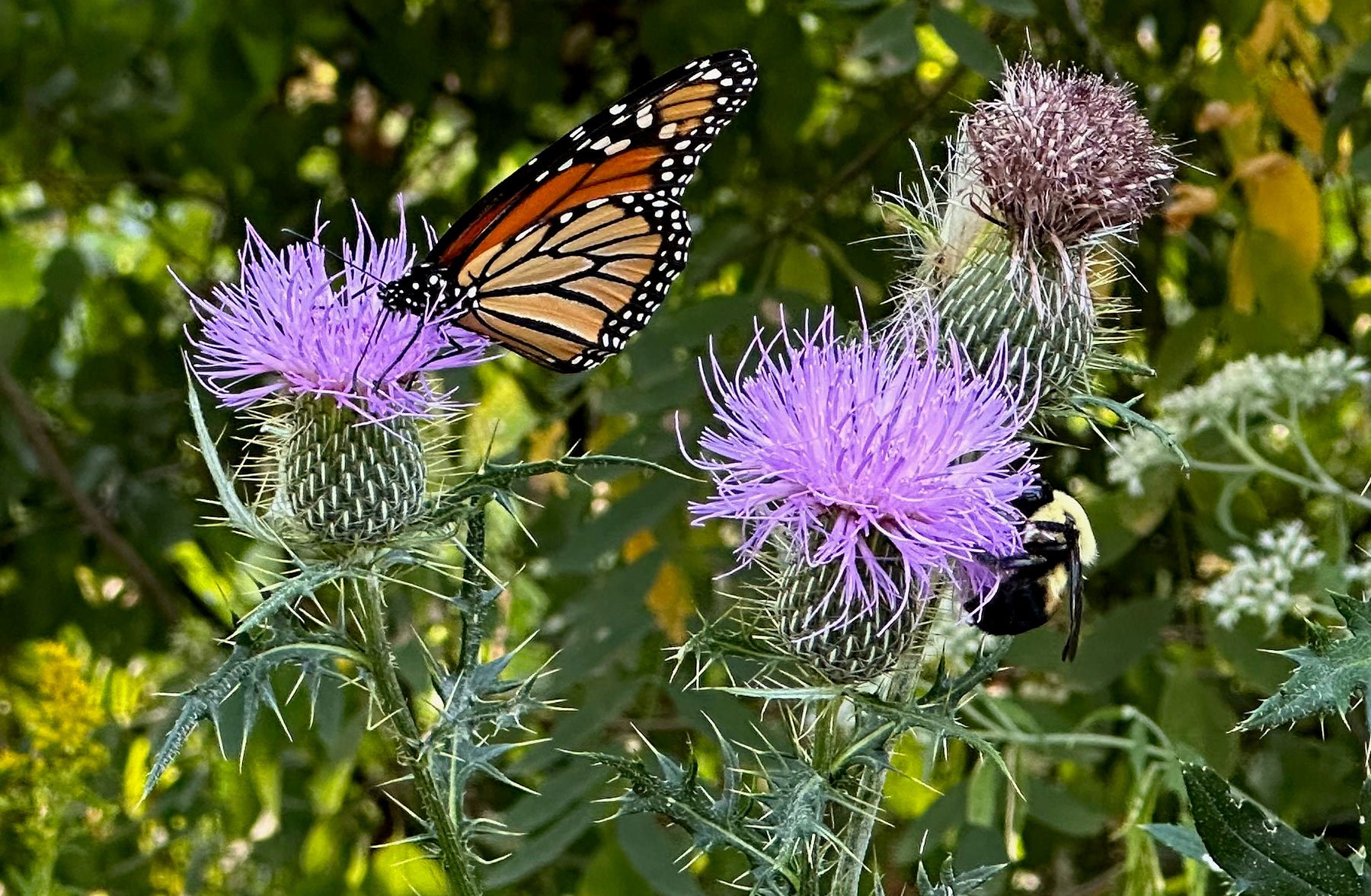
Declining Numbers Threaten Monarchs
Each winter since 1993, researchers have been gauging the number of eastern monarchs that over winter in central Mexico. They do this by measuring the total area of trees occupied by monarch clusters. At their height in 1996-1997, monarchs covered 18.19 hectares (44.9 acres) of trees. With roughly 20 million to 30 million monarchs per hectare, the estimated population at that time was between 364 million and 546 million. In the last 15 years, monarch numbers have been as low as 13 million to 20 million. Most recently (2025-2026), an estimated 59 million to 88 million monarchs occupied 2.93 hectares (7.2 acres).
Research suggests that at least 6 hectares of occupied overwinter habitat is needed to support a stable eastern migratory population. That number has been achieved only twice in the last 22 years. Since the mid-1990s, eastern monarchs have declined by approximately 80%, and the numbers of western monarchs, which primarily overwinter in coastal California, have fallen more than 95% since 1980.
Concerns about prolonged decreases in monarch populations prompted a proposal by the U.S. Fish and Wildlife Service to list the monarch as a threatened species under the Endangered Species Act. The proposal, which was issued in December 2024, was recently categorized as a “long-term action” by the U.S. Department of the Interior, meaning that no action is expected until fall 2026 at the earliest. If approved, the USFWS may take measures to protect and enhance critical habitats for monarchs in federally managed or funded areas and to engage with local communities and stakeholders in conservation efforts.
How to Help
Monarchs are completely dependent on pesticide-free, native milkweeds. Without milkweeds, they simply cannot make more monarchs. Female monarchs lay 300-500 eggs over a two-to-five-week period on the underside of milkweed leaves. The caterpillars that emerge are eating machines, and the only food they eat is milkweed. Planting patches of milkweed is one of the best ways to support monarchs. Native milkweeds that are easy to establish and preferred by monarchs in this region are common milkweed and swamp milkweed. These plants are crucial in early and midsummer.
The best habitat for adult monarchs contains both milkweeds and nectar-rich flowers that bloom throughout the growing season and can fuel a butterfly’s summer activity and eventual migration. A list of monarch nectar plants for the Midwest region can be found at The Xerces Society and pesticide-free milkweed can be purchase at the Milkweed Market.
To offset the loss of habitat that once supported vast numbers of milkweed and other wildflowers, consider creating a “Monarch Waystation.” Waystations can be as simple as adding milkweed and nectar sources to existing home gardens. Once you have created a waystation, registered it with Monarch Watch as an official Monarch Waystation. You will receive a certificate, and your monarch garden will be added to the 156 registered waystations in Indianapolis. According to Monarch Watch, “no effort is too small to have a positive impact.”
