

Reversing a Cycle of Ecological Degradation
When the Office of Land Stewardship was established in 1992, Skiles Test Nature Park was so littered with broken glass, pieces of metal and busted up concrete that a Skiles Test Elementary School teacher felt it was too dangerous for her second-grade students to observe Earth Day in the park.
The degraded state of the property in the early 1990s was particularly upsetting given that a 1987 park plan to turn Skiles Test Nature Park into an educational outlet for children with winding trails and a nature pond had not yet materialized. Instead, staff members from the newly instituted Office of Land Stewardship were confronted with a landscape heavily infested with invasive plants. The product of decades of disturbance from agriculture row crops, pasture grazing, buildings and roads that stripped the soil of native plant cover and created ideal conditions for invasive seeds to germinate and take hold. This process essentially locked the land into a repeated cycle of ecological degradation.
Since its inception, Land Stewardship has been charged with restoring the ecological health of Indy’s natural areas. At Skiles Test Nature Park, this meant addressing the destruction of native habitat caused by agricultural use and the infestation of invasives that threatened the health of the park’s woodlands.
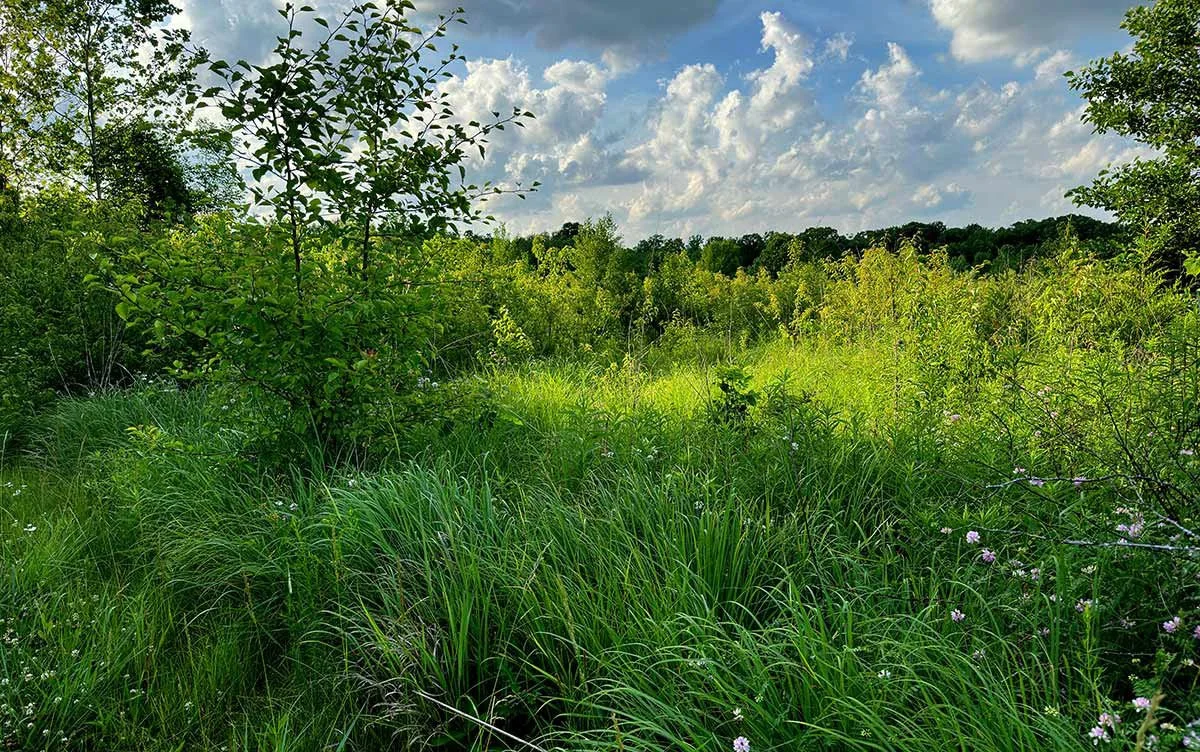
The Prairie
In 1995, Land Stewardship began the park’s recovery process by converting 14-acres of formally cultivated cropland east of the paved trail into a habitat-rich tall grass prairie. A cost-share program from the U.S. Fish and Wildlife Service helped pay for the initial seed. Land Stewardship installed the seed and managed the prairie’s establishment, mowing it every few years to control weeds and help establish slower-growing native plants. Over the years, native hardwoods were added to the eastern and southern edge of the prairie to expand this habitat-rich area and help buffer the noise of the interstate. The planted prairie was extended west of the trail in 2009-2010 after that field was cleared of honeysuckle.
Over the past 30 years, the prairie as aged and its plant mix has changed through an ecological process called succession. Today, the grass and wildflower species that were planted in 1995 are being replaced by shrubs and small trees. Eventually various generations of tree species will inhabit the prairie until a final set of long-lived trees becomes dominant and land resembles the forest it once was.
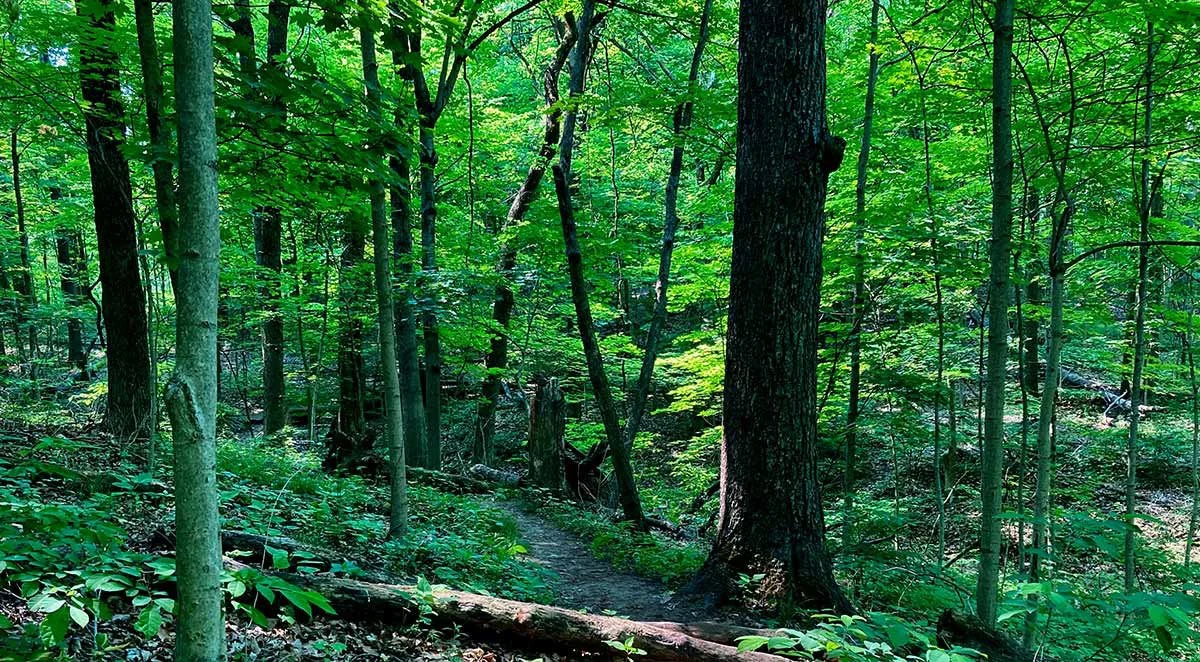
These woodlands were once infested with Asian bush honeysuckle.
Fighting Invasives
To fully restore the ecological health of the nature park, Land Stewardship needed to clear and control the spread invasive plants that threaten the natural features of the park. A 2012 management plan indicated that most of the woodlands throughout the nature park were heavily infested with Asian bush honeysuckle and other invasive plant species. At that time, Land Stewardship managed 35 acres in the mid-section of the park. A funding issue left most of the wooded areas outside their management zone and inaccessible to people and wildlife due to the honeysuckle infestation.
Today, Land Stewardship manages 99% of the park’s 80.9 acres, and this year completed a large scale clearing of Asian bush honeysuckle from western section of the park. While more work and funding are needed to clear the honeysuckle from the eastern ridge of the park, the extent of the progress since OLS started managing the property is astounding. Without the dedication, passion and visionary management of Skiles Test Nature Park by the Land Stewardship team, the park might still be a place unfit for second graders.
